Li Jing, an ophthalmologist, takes you to learn more about cataracts in dogs and cats. You must have all these questions.
Ultimate Harm of Cataract
When the eye lens of the pet has cataract lesions, the light can not penetrate. If the whole lens has cataract lesions, the pet will lose vision. If both eyes of the animal have cataract lesions, the animal will be blind.
The lens of the cataract may dislocate, which means that it slips from its original position and falls into other spaces of the eye, causing further damage to the eye.
Cataract causes glaucoma
If the lens slips into a way that blocks the outflow of aqueous humor, it can cause glaucoma (increased intraocular pressure), which can not only cause pain, but also cause permanent blindness.
Cataract is a disease that itself can cause glaucoma. When cataracts are present long enough, they can liquefy. This may sound like a good thing, but it's actually a highly inflammatory process that causes inflammation to spread deeper into the eye, called uveitis, a complication that can cause eye pain and secondary glaucoma.
If uveitis is found in the eye before operation, the inflammation must be controlled first. If cataract is diagnosed and the course of the disease develops rapidly, it is recommended that surgery be performed before the cataract is fully mature, so that postoperative complications will be reduced.
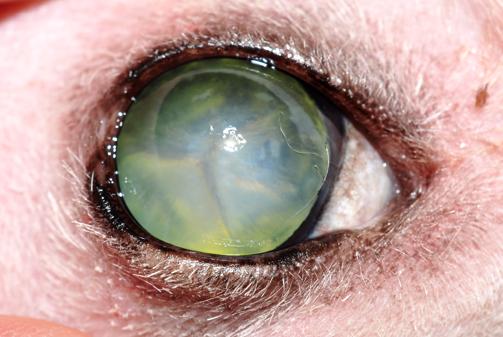
The eye part is cloudy with a cloud-like appearance, which is cataract?
In fact, many pet owners can not accurately distinguish which part of the eye is cloudy. For example, the cornea can also have a cloudy appearance caused by other diseases, which are often mistaken for cataracts. As
dogs and cats age, the density of the lens increases, and the lens will appear nuclear sclerosis, which is also very easy to be mistaken for cataract. Nuclear sclerosis is a normal physiological change in older dogs and does not affect vision, so it does not require treatment. If you think your pet has cataracts, the best solution is to take it to an animal eye clinic for an eye examination by an animal eye doctor to confirm whether it is cataract disease.
How is cataract treated?
If the lens has been dislocated, the most common dislocation is the posterior dislocation of the lens, that is, the lens is located behind the iris. Common treatments
for cataracts include total lens extraction and phacoemulsification under anesthesia. This operation is highly invasive and expensive, so it can only be performed on the premise of restoring vision and relieving pain. If an animal has vision in one eye and a cataract in the other eye, it can be determined on a case-by-case basis whether the eye with the cataract needs surgery.
What does cataract operation have to notice?
1. First of all, if anesthesia is to be performed, the overall condition of the pet should be healthy.
2. Complete ophthalmic examination is necessary before operation. If the general practitioner is unable to carry out a full eye examination, a referral to an eye specialist is required.
3. Preoperative examination can be carried out at the general practitioner's office. Some ophthalmologists will recommend cleaning the pet's teeth first, which can reduce the risk of infection from the teeth to the eyes.
4. Pets with diabetes must adjust the blood sugar curve before the operation.
5. Late treatment cooperation. After ophthalmic surgery, pet owners must strictly give their pets eye drops at home according to medical supervision.