

Why should I be caged?
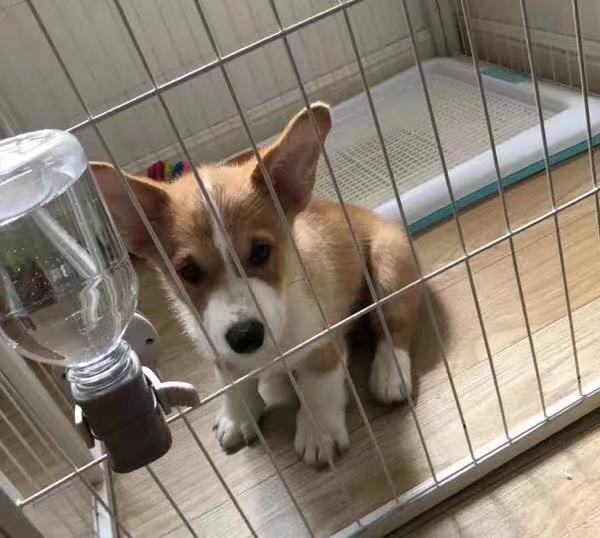
1. In summer, the weather is hot and the ground is humid. The air conditioner in the living room is always on. If it is not caged, Kimi will always lie under the air conditioner and catch a cold easily. It is also prone to skin diseases, arthritis and so on.
Training background
Kimi was born on March 21, 2018. He has been kept in captivity since he was brought back. Sometimes he will make a gentle roar in the morning. If we ignore him, he will stop. In winter, when the weather is cool, they will take the initiative to go back to the cage to sleep. But at the end of May this year (2019), due to a business trip, I fostered Kimi in my mother's home for about 3 or 4 days. During this period of foster care, I have been in a state of free range. Maybe I am used to being free and undisciplined, and I don't want to sleep in the cage after I come back. As soon as he was locked in the cage, he would shout endlessly. In order to avoid affecting the rest of his neighbors, he had to be released.
Training methods

(This training method is obtained by one-to-one video remote teaching with professional dog trainers, worth 88 yuan ~)
Phase I: (about 2 days)
At first, short ropes were used, and people hid outside the room. Because the rope was not long enough, it was too late to go in and pull the rope after hearing Kimi's call, and then it was replaced by a telescopic rope.
1. Put a collar and a long rope on the dog. It is recommended to use a telescopic leash.

This process is the hardest and most patient. In these two days, Kimi was very nervous in the cage at the beginning. She was standing in the cage all the time and was unwilling to eat. Slowly, the situation has improved and the state has relaxed.
The second stage

After two days of training in the cage, Kimi stopped screaming and got used to it. At this time, I kept the lead rope in the cage at one end and the handle outside, and no longer tied the rope to Kimi's neck. When Kimi called, I went in and tied the rope. After a while, I didn't call, so I went to untie the rope. By the end, Kimi was too good to bark in the cage. You can always keep the state of not tying the rope.
The third stage
When the dog can stay in the cage without barking, it needs to wear the collar around the dog's neck for a period of time, which can be controlled by the owner himself, but at this stage, the leash can be put away, and there is no need to put it in the cage to deter the dog. When the dog is able to maintain good behavior, the collar can be removed and the training is over.
The last words

Kimi was already an adult at the time of this training. She did not have separation anxiety, nor did she reject the cage so much. She was purely naughty. This method may not be suitable if the puppy barks because of separation anxiety, or if some dogs want to bite as soon as they close the cage.
![[Experience Sharing] Dog cage training](https://img.tabanpet.com/2019-05/16/22/8434900c481e57ceaa95cd979c9e573e.jpg?x-oss-process=image/resize,m_fill,w_140,h_100)