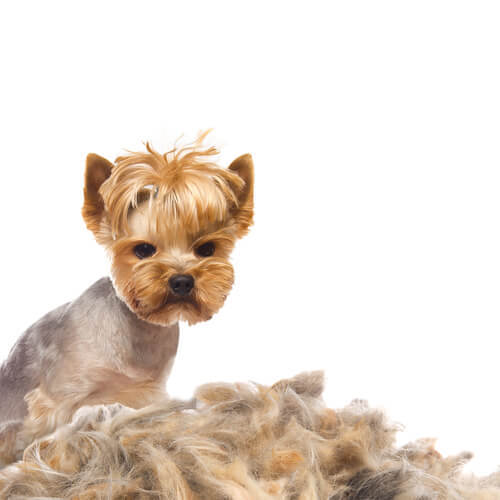
It's the molting season again, and both parents of dogs and cats are confused about why they lose their hair? Why does it lose so much hair? OMG, don't wait until they're going bald!
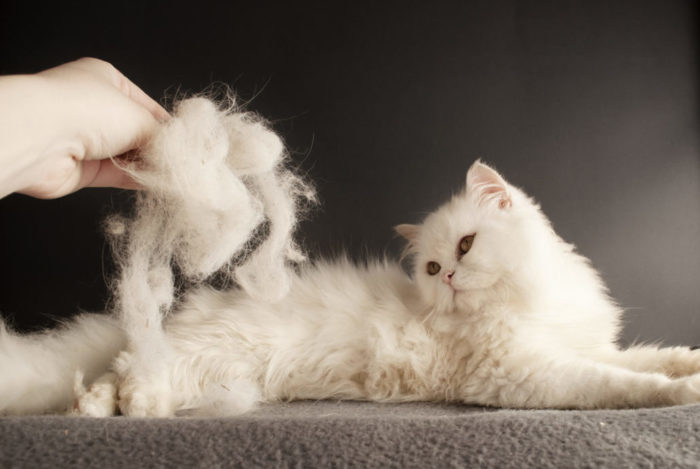
Physiological hair loss
There is a "hair-shedding monster" at home, and three sharp tools are recommended: sweeping robot, vacuum cleaner and water-spraying mop. In addition, it is also a good way to comb pets regularly.
1 Seasonal molting
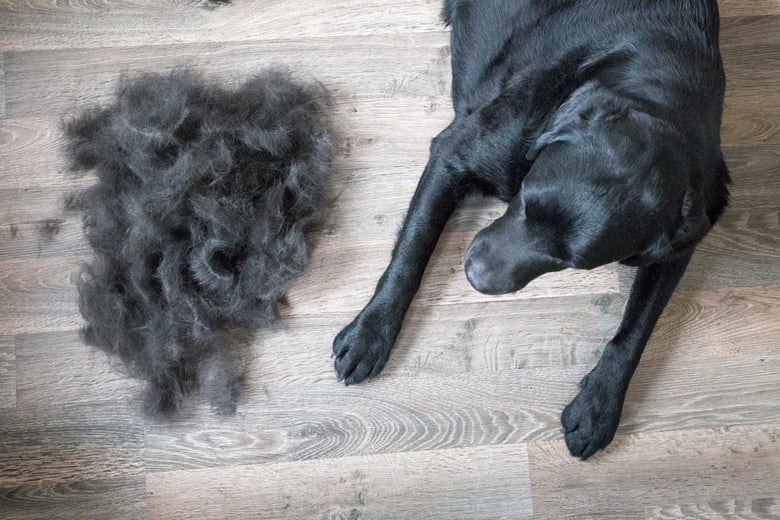
Spring and summer molting, mainly to shed hair, cats and dogs grow fluffy coarse hair to dissipate heat; autumn and winter molting, mainly to shed coarse hair, cats and dogs grow soft hair to keep warm.
In terms of the amount of
2 Metabolism
The hair of cats and dogs also goes through the process of growth, death, shedding and replacement, so the hair loss cycle caused by metabolism is even more touching: anytime, anywhere, all year round.
3. Growth period
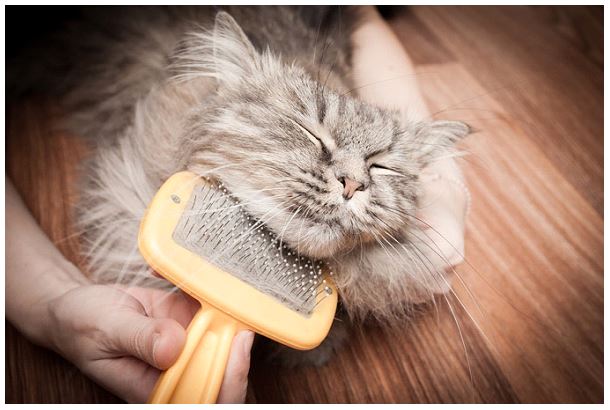
After giving birth, Meow's mother and Wang's mother often lose a lot of hair due to the loss of nutrients.
4 Estrus
Cats and dogs in estrus are affected by hormones, and their hair is flying everywhere.
5 getting on in years
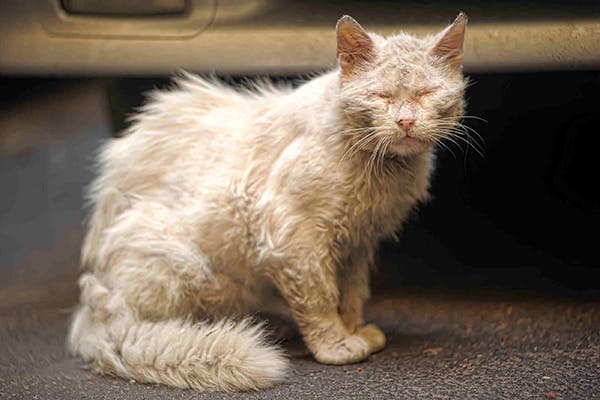
Cats and dogs enter old age, because of slow metabolism will also appear hair loss phenomenon, this normal hair loss will not exist skin itching, swelling or dandruff phenomenon.
Skin problems, hair loss
Some people find a piece of skin bald because of frequent scratching by cats and dogs, and some people always feel that this piece of hair is thinner than other places when combing. Most of these unexpected discoveries are skin accidents.
1 Mite infection
If your cat or dog is infected with mites, the cat or dog will bite and scratch crazily in order to relieve itching, resulting in not only baldness, but also broken skin.
Parasites such as fleas and lice
Dogs and cats with thick hair are a haven for fleas and lice. They are active in the inner thigh, armpit, neck and other places of hairy children, where they are extremely itchy, hairy children have to try their best to stop itching, "violence" to tear off a lot of hair.
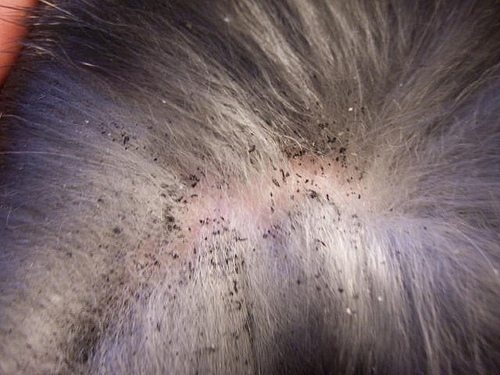
The eggs
Fungal infections and various kinds of ringworm
When cats and dogs suffer from fungal dermatitis, the affected part is depilated, with local white powdery scab and red protuberances (erythema) under and around the scab. In this case, cats and dogs will not feel itchy, but will lose their hair until they are bald.
4 Eczema
Eczema is also a major cause of hair loss in cats and dogs. Because of persistent itching, cats and dogs scratch and lose their hair, which in turn aggravates dandruff damage, inflammation and infection, a vicious circle.
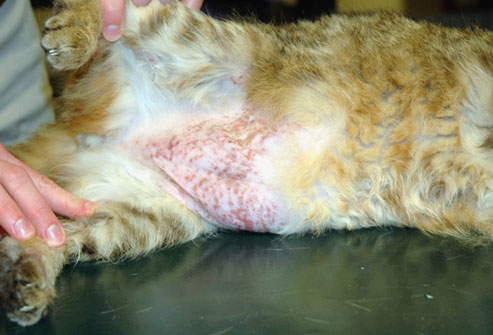
In the early stage of
5 Allergy
Pets have sensitive skin, and if allergies occur, it is easy to cause hair loss.
Folliculitis
Folliculitis occurs in cats, commonly known as black chin, which is characterized by many small black spots on the chin, like cinder. Some cats also occur at the root of the tail, which shows that the root of the tail is always dirty, as if it can not be washed clean.
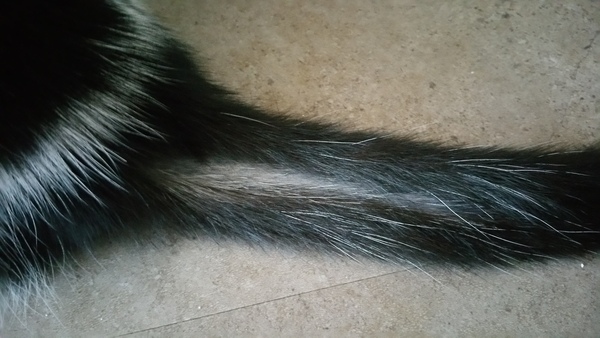
Whether it's a cat or a dog, it's easy to wipe off the hair when you wipe the small black spots with your hands. After folliculitis lasts for a period of time, the hair falls off and the skin of cats and dogs is exposed, accompanied by inflammation and swelling, sometimes pustules. If the disease is serious, cats and dogs will lose a large area of hair, just like being eaten by moths.