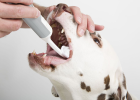
Gums are an often overlooked part of your dog's mouth, but they are just as important as your dog's teeth and need to be cared for to keep them clean and healthy.
Gingival bleeding ing
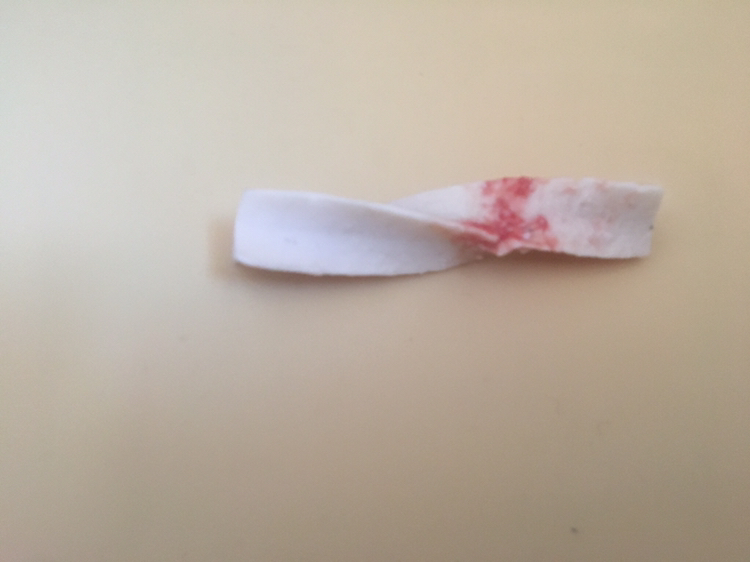
Dogs bleed when they lack certain nutrients or bite hard things. Dogs need vitamin C supplements if bleeding is a gum problem. The grizzly bear's gums were bleeding when Mommy fed her the teething stick. Because the grizzly bear had a lot of teething sticks and chews, Mommy picked out a short dog brand teething stick (bought in the beauty shop) and gave it to her. I didn't look carefully. The teething stick needed to be eaten by dogs over 6 months old (the grizzly bear was 5 months old at that time). It was too hard for her.
Bleeding gums are a precursor to periodontal disease.
Because I was not around at that time, I could only search the problem of bleeding gums on Baidu, and found that the dog's bleeding gums was not a trivial matter. Gingival bleeding is common in the early stage of periodontitis and gingivitis. If the plaque in the dog's mouth is not removed in time, it will gradually harden and form dental calculus. Dental calculus is mostly located at the junction of teeth and gums. This hard calculus has a continuous stimulating effect on the gums. When the normal gums are stimulated by inflammation, the capillaries of the gums increase, become congested, and the color of the gums darkens. Once stimulated, the gums are prone to bleeding.
Bleeding gums tend to occur in small dogs because their teeth are crowded together-small dogs have smaller mouths and larger teeth.
Treatment plan
After consulting with our veterinarian, it was determined that our grizzly did not have periodontal disease, but was a common phenomenon during the period of tooth replacement, and according to the medical supervision, the treatment of bleeding gums was started.
Drink plenty of water
Bleeding caused by tooth replacement is not a big problem. Take the grizzly bear to drink more water. Water can detoxify her mouth. If there are bacteria in the bleeding area, it can also be discharged with the excretion of water.
Get more rest
When the grizzly bear's gums are bleeding, her body is also uncomfortable, so when her gums are bleeding, it's better to let her rest. Do not always play with her, so as to enhance their own resistance, but also effectively avoid excessive bacteria, but also to avoid inflammation, and ultimately make the disease more serious.

Brush your teeth frequently
Doctors say there is a misconception that dogs should not brush their teeth because their gums are bleeding. In fact, dogs with bleeding gums should first take her to see a doctor to confirm what the condition is; grizzly bears with bleeding gums and small bleeding spots need to brush their teeth on time. Brushing teeth on time can not only help grizzly bear clean bleeding points, but also eliminate the bad breath caused by tooth replacement, maintain a clean oral environment, which is conducive to the improvement of gum bleeding problems.
With anti-inflammatory drugs
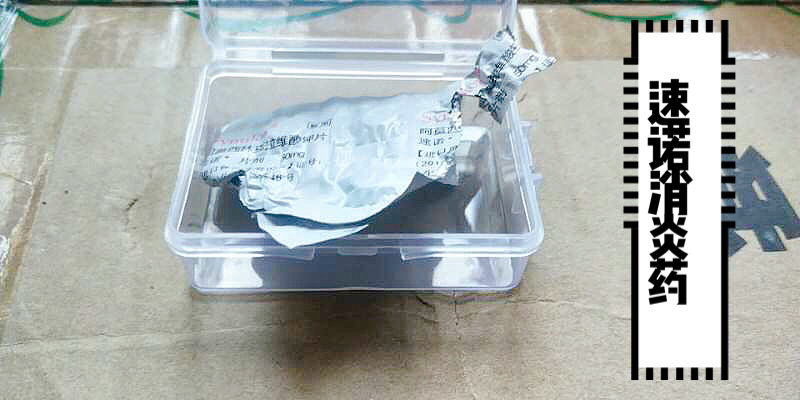
Gum bleeding is bound to have bleeding spots, and the dog's oral environment is very worrying, or to prevent inflammation and bacteria near the bleeding spots caused by poor oral environment. There are a lot of common anti-inflammatory drugs. If it's too much trouble, you can go to the drugstore to buy the anti-inflammatory drugs that children eat. When you get home, you grind them into powder and mix them into their food in a small amount. I myself prescribed the dog's special Suonuo for grizzly bears, pink tablets, which she likes and does not reject.
Supplement vitamin C
Gum bleeding may also be caused by vitamin C deficiency, which requires a look at the color of the gums and whether there is redness and swelling. Grizzly bear is contact gum bleeding, that is, bleeding when eating or touching hard things, it is necessary to give grizzly bear to eat vitamin C, 1 tablet a day on the line, drink more water after taking medicine to better absorb the need to supplement vitamin C. Because dogs do not absorb vitamins well, it is best to choose water-soluble vitamin C, which is conducive to the absorption of vitamins by dogs and reduces tooth bleeding.