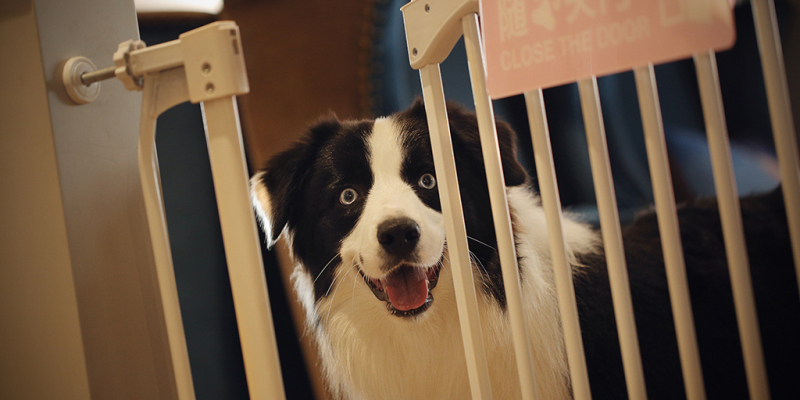
In order to prevent dogs from making trouble at home, some shovelers will come up with the idea of putting dogs in cages when they leave home, but they don't know if this is correct. E doctor will tell everyone now that dogs can be kept in cages, but they should also pay attention to the correct method. interested shoveling officials should come and learn quickly!

Set up the correct concept of cage
Although dogs can be caged, they should not be blind. First, follow Dr. E to establish a correct concept of caging!

1 Cage and peace of mind
(1) Give TA more sense of security
When the dog is frightened, such as thunder and punishment by the owner, TA will hide in the corner to seek a sense of security. Small and enclosed spaces such as cages and air boxes are very suitable for safe houses for dogs.
Preventing separation anxiety
When the dog regards the cage or the air box as his safe house, no matter how the external environment changes, as long as the dog's familiar cage is still there, TA will not be nervous and anxious. When the shoveling officer is not at home, cage can also effectively alleviate the dog's separation anxiety.
(3) foster travel good helper
When taking a dog to travel or putting the dog in foster care, it means that the environment in which the dog lives will change. At this time, if you bring the air box and cage with the familiar taste of the dog, TA's ability to adapt to the new environment will be enhanced.
2 errors of cage
1) Cage is not free.
Some shovelers will think that putting dogs in cages restricts TA's freedom and is very pitiful. However, for dogs who are too naughty, it is better to restrict TA's freedom. Besides, TA can also play with his favorite toys in the cage.
(2) Cage ≠ Cage for a long time
Dogs should not stay in the cage for too long, otherwise closing the cage for a long time will affect the dog's bone development, resulting in eight-legged feet, lying hoof, etc.

(3) Cage ≠ Punishment Tool
When a dog makes a mistake, some shoveling officers will put the dog in a cage and think about it. In fact, this is wrong! Because this will make the dog associated with the cage and bad things, and thus fear the cage.
Training cages have a clever trick.
Of course, caged dogs also need the right training methods, if the improper operation may make the dog afraid of the cage.

1 Choose the right cage
The dog is active. When selecting the cage, the size of the cage must exceed the length of the dog, so as to ensure that the dog has enough place to turn in the cage.
2 Guide the dog into the cage with snacks or toys
After choosing a cage, put the dog's favorite snacks or toys in your hands and slowly lure the dog into the cage. After the dog enters the cage, give TA the food or toys in his hand. The shoveling officer can also put toys or food directly in the cage to lure the dog into the cage.
3 Do not close the cage door
After the dog enters the cage, do not close the cage door first, and leave the cage door open so that the dog can enter and exit freely. After many days, the dog is used to playing and eating in the cage, and then the cage door is closed to test the dog's reaction. At this time, the cage door should not be locked so that the dog can open the cage door by itself when rejection occurs.
4 placed near the owner to add a sense of security
If it is a newly-arrived dog or a newly-born puppy, the shoveling officer can place the cage closer to himself to increase TA's sense of security.
5 Repeated training
Repeat the above training, and after the dog is fully adapted to the activities in the cage, the cage door can be locked. Slowly, TA will be willing to stay in the cage!