In March and April, there will be beautiful spring scenery and continuous spring rain. In addition to moistening everything, humid weather is more likely to breed bacteria. Normally healthy dogs not only have sticky hair, but also can be infected by uncontrolled bacterial reproduction if they are not careful, especially when they are troubled by the difficult problem of eczema. As a qualified shoveling officer, "moisture-proof" work should be done in place so that dogs can spend a comfortable spring.
What is eczema?
Eczema is an allergic inflammation of the epidermis and papillary dermis of the skin. It is a delayed allergic reaction, which usually occurs periodically and may be accompanied by asthma or allergic rhinitis. Inflammation of the dog's skin, regardless of the cause, is called dermatitis, while eczema is a dermatitis characterized by superficial inflammation caused by dampness, mud, friction, etc.
In hot and humid spring and summer, eczema is one of the skin diseases that many pets are prone to suffer from. From the beginning of red spots to itching, depilation, blisters and so on, eczema is a common symptom. Dogs of the Shar Pei, Boston Terrier, Labrador Retriever, Scottish Terrier, and Shih Tzu breeds are more susceptible to eczema. The morbidity is between 6 months and 3 years of age. Clinical features are usually seasonal and may occur throughout the year, but seasonal outbreaks are possible.
Why can you get eczema?
Eczema is a disease in which the skin barrier is broken, which may be aggravated by allergies, but the reason why the barrier itself is broken is not clear. The occurrence of eczema depends on two aspects: one is allergic diathesis, and the other is allergenic factors.
Generally speaking, eczema is caused by the following reasons:
1. Often stimulated by various external factors. For example, the local application of strong acid and alkaline drugs or excessive use of alkaline soap and detergent to clean skin can easily lead to the occurrence of eczema; the friction and oppression of the collar on the skin can cause local eczema; insect bites and parasites are also a stimulus to the dog from the outside world.
Symptoms of eczema
Eczema usually occurs in the neck, back, abdomen, tail root, eggs and toes of pets, of which the neck and abdomen are the most common.
Eczema in dogs is divided into acute eczema and chronic eczema:
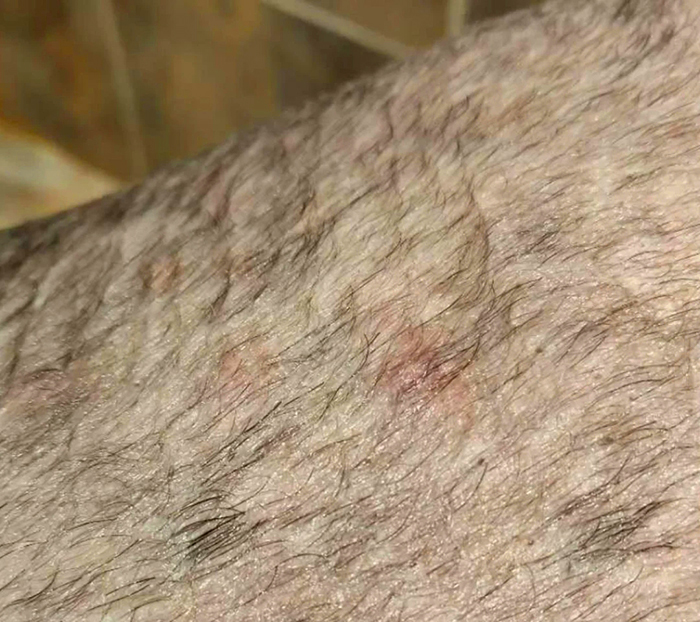
(Pictures provided by pet friends)
Compared with other skin diseases, the symptoms of eczema are not special, and the clinical signs are diverse, which is mainly related to genetic factors, the degree of lesions, the stage of the disease, whether secondary microbial infections or other outbreak factors. When eczema is severe, it can lead to extensive skin necrosis and exfoliation. After the disease, the dog's mental level will be greatly reduced, becoming depressed and depressed, and its appetite will be reduced due to the pain of the disease. In severe cases, it will die due to elevated body temperature or secondary sepsis.
Prevention and treatment
1. Eliminate the cause of disease and eliminate the stimulating factors. Do a good job of repelling insects inside and outside the pet, keep the pet clean and remove the odor;