
A few days ago, a friend with a dog came to consult Dr. E,

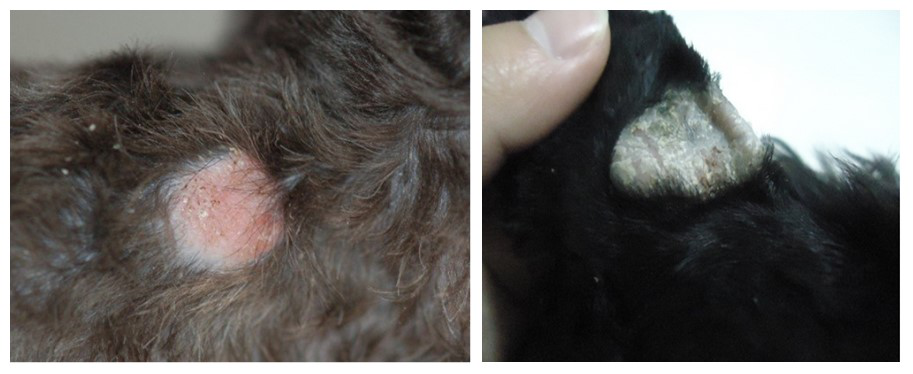
Fungi
(1) The affected area is generally oval or round, and the boundary with healthy skin is obvious;
(2) Have scab and peel off easily, the skin after peeling off is smooth, will not thicken, but form a large area of tinea spots (such as honeycomb), itching is not strong;
(3) Scale-like fine scurf may appear.
Bacteria
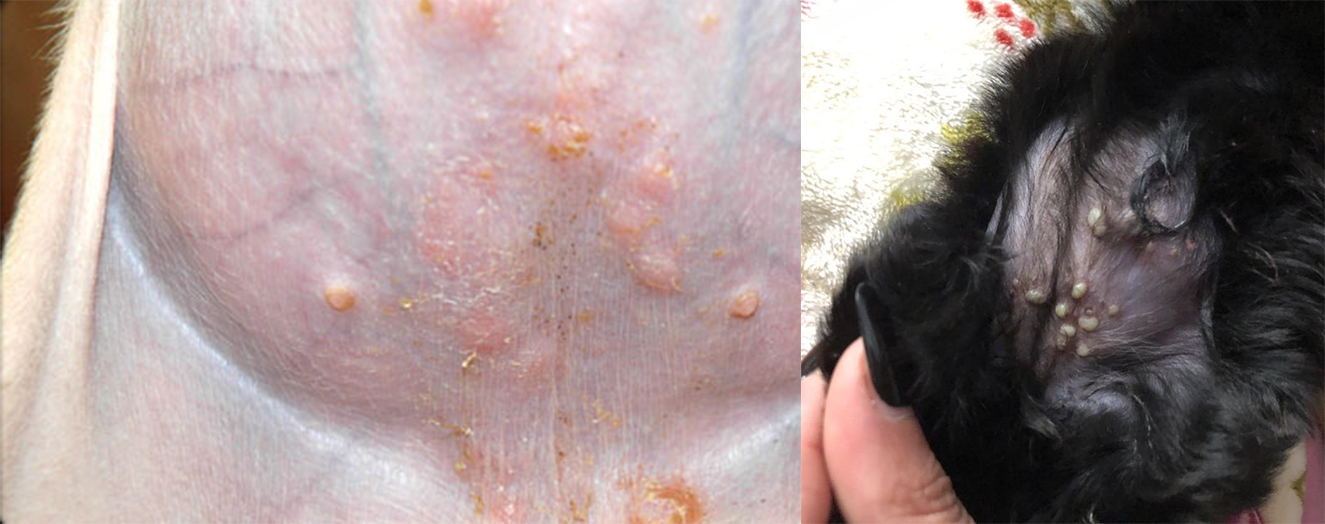
Pyoderma
(1) Papular type: similar to scabies mite infection, but with a large number of pustules;
exudative type: similar to fungal infection, the lesion area is massive, usually the central area is black, with yellow crusts around it;
(2) Serious depilation, but depilation is not as obvious as fungi, and the skin emits fishy odor;
(3) The skin of the affected area is black, and black, thick and hard abnormal hair will grow (typical characteristics).
Eczema
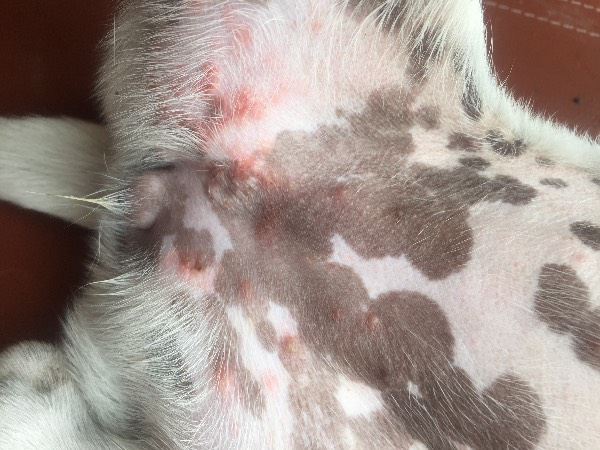
It's similar to pyoderma. Skin erythema, papules, blisters, erosion and scab in the later stage, accompanied by heat, pain and itching symptoms.
Mites
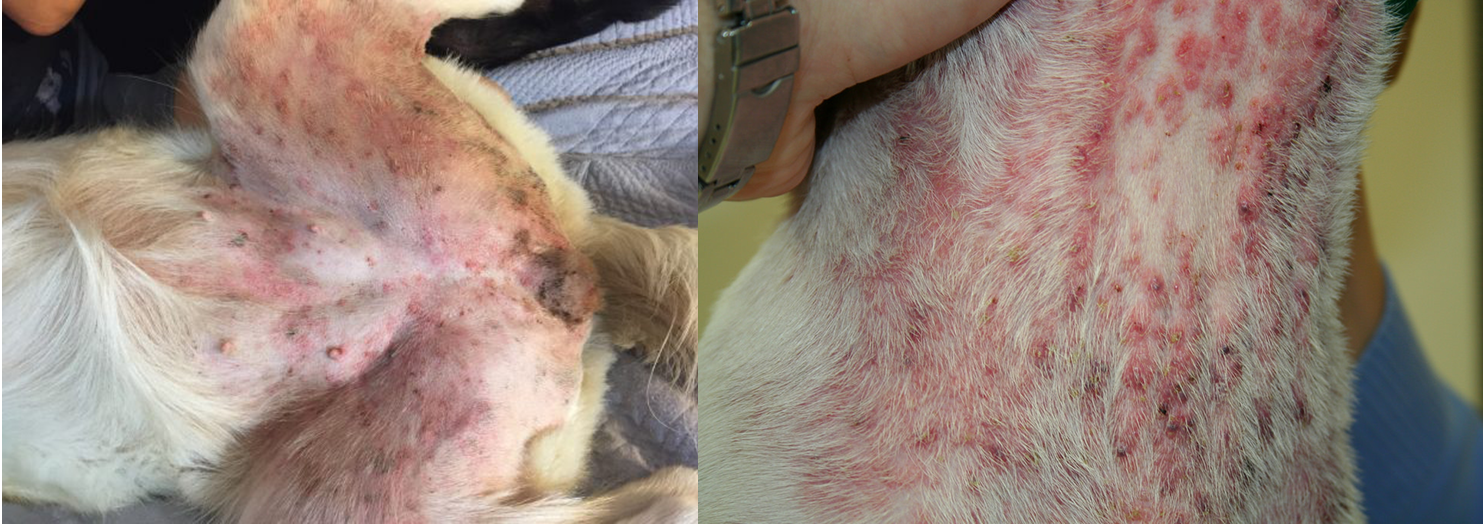
Scabies
(1) General meeting appears a large number of roseola, scurf also can increase;
(2) Dogs infected for a long time will have skin thickening, fold formation and bleeding, and small pustules and yellow crusts will appear if they are infected with bacteria at the same time;
(3) Extremely itchy, the dog will keep scratching.
Demodex
No itching, the affected area only appears red and hair loss symptoms, severe skin thickening and bleeding will occur.
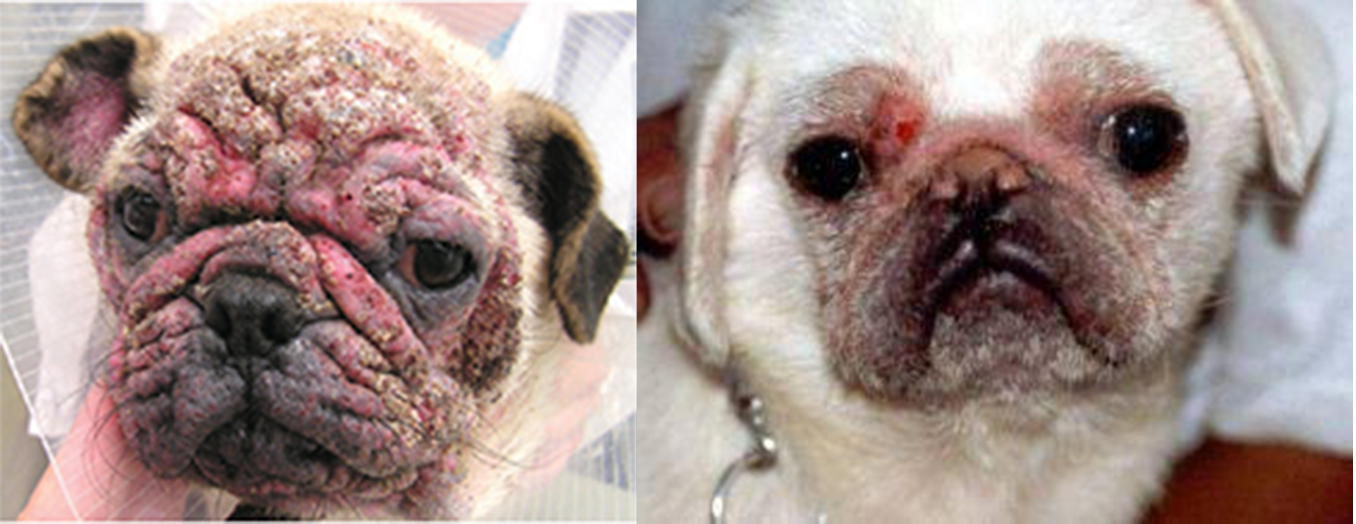
Dermatitis
Seborrheic dermatitis
(1) The hair is scattered with gray-white or silvery dry scales, and the depilation is light;
(2) The skin and hair at the root of the tail with developed sebaceous glands contain a large amount of grease or attached with yellow-brown grease blocks. It looks like it can't be washed clean, similar to the blackheads on the nose;
(3) Pruritus, scaling and severe depilation of the affected part, large or flaky.
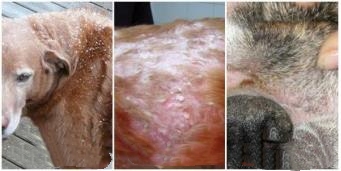
Allergic dermatitis
(1) Food allergy or drug allergy is generally manifested as mouth swelling or eye swelling;
(2) Edema of the skin with papules and erythema;
(3) The dog is very itchy and frequently licks, bites and scratches.
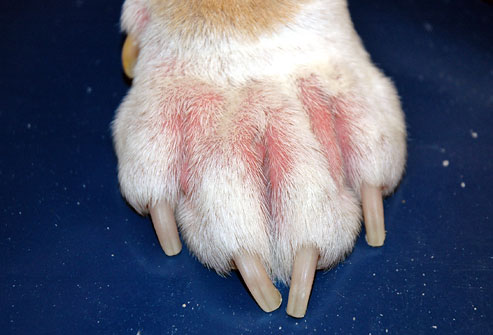
Drug irritant dermatitis
The dog's skin is obviously red locally or all over the body.
2. Picture of symptoms
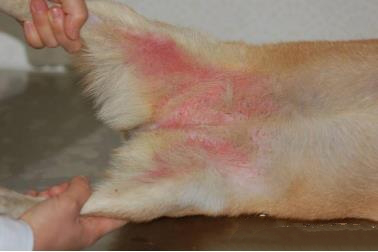
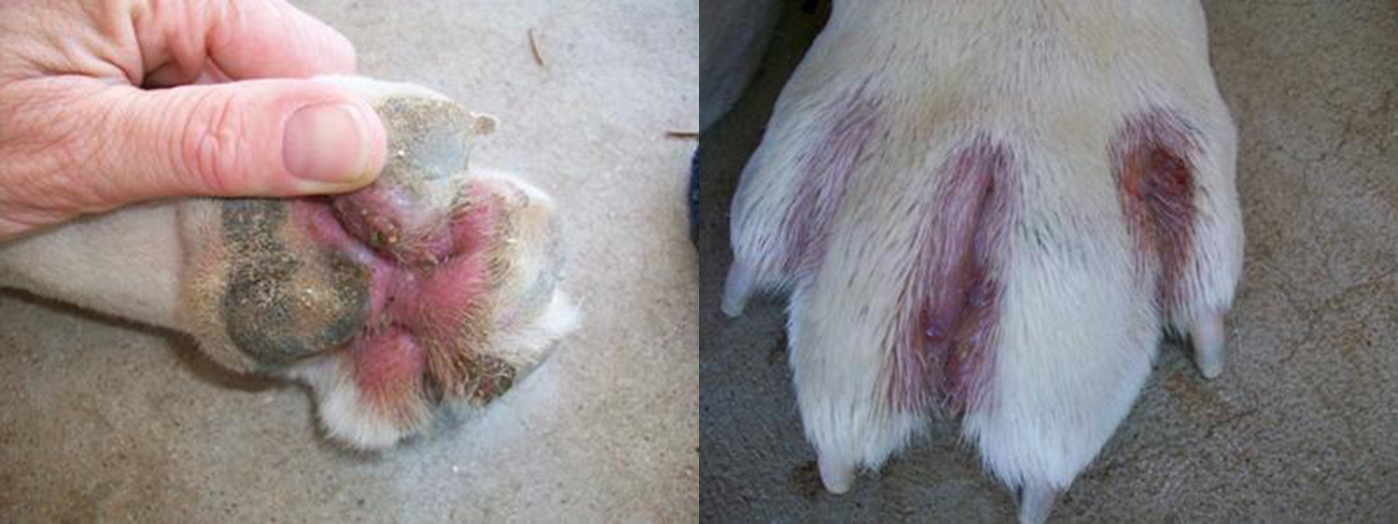
Interphalangeal inflammation
When the dog's toes are red, swollen and shedding, the dog will constantly lick and chew his feet.
Speaking of this, do shoveling officials have a better understanding of various skin diseases? Encounter the dermatosis that cannot distinguish again next time, take out a mobile phone, click open an article, contrast has a look ~