When the dog confirms kidney failure, the kidney has been damaged more than half, facing the risk of losing life, how to deal with it? Is there any way to avoid kidney failure?
Real case
Case 1:
In September 2015, a 10-year-old male Pomeranian dog was diagnosed with acute renal failure secondary to canine bladder perineal hernia after seven days of poor urination, a bulging bag on his buttocks, which was getting bigger and bigger, wilting and unwilling to eat.
Case 2:
In October 2015, a 1-year-old male pastoral dog showed symptoms of screaming and severe vomiting after being led home the day before. After timely examination, he was diagnosed with acute renal failure caused by canine pancreatitis.
Case 3:
After being fed gentamicin in March 2017, the 2-year-old cat showed signs of depression, vomiting and sensitivity to touch, and was diagnosed as acute pancreatitis after examination.
There are so many triggers for kidney failure. Drugs, grape poisoning, urinary stones, and other unknown factors can all lead to acute damage to kidney function and failure.

Acute renal failure
Recognize Acute Renal Failure
Acute renal failure (ARF) is a syndrome in which renal function is drastically reduced due to ischemia and toxin damage, resulting in the inability to excrete "waste".
Acute renal failure in dogs is often caused by acute factors, such as poisoning and trauma. The morbidity of acute renal failure is acute and the process is short. If it is treated in time, it often recovers well. If it is not treated in time or the kidney is seriously damaged, it may die or turn into chronic renal failure.
Treatment of acute renal failure
Treat primary diseases, prevent dehydration and shock, correct hyperkalemia and acidosis, relieve azotemia, control blood pressure, and avoid multiple organ damage.
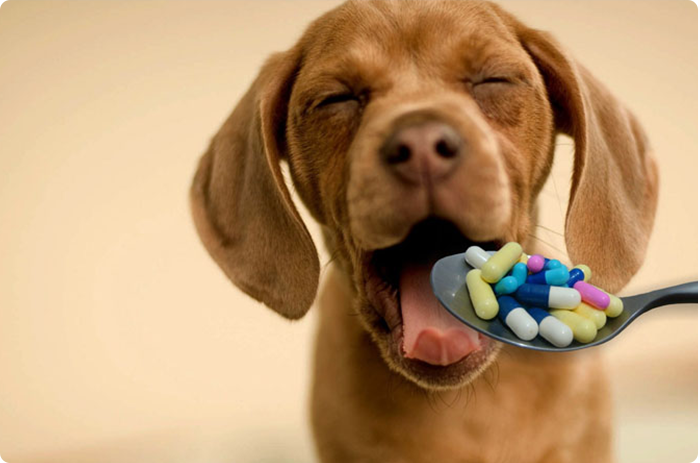
When kidney damage is suspected, all drugs that are harmful to the kidney or have obvious side effects should be discontinued immediately (such as gentamicin in case 3). Diagnosing and treating the primary disease (such as case 1: canine bladder perineal hernia, case 2: canine pancreatitis), and striving for the early cure of the original morbidity, is more conducive to the recovery of the kidney.
(1) Treatment of primary disease
In case of
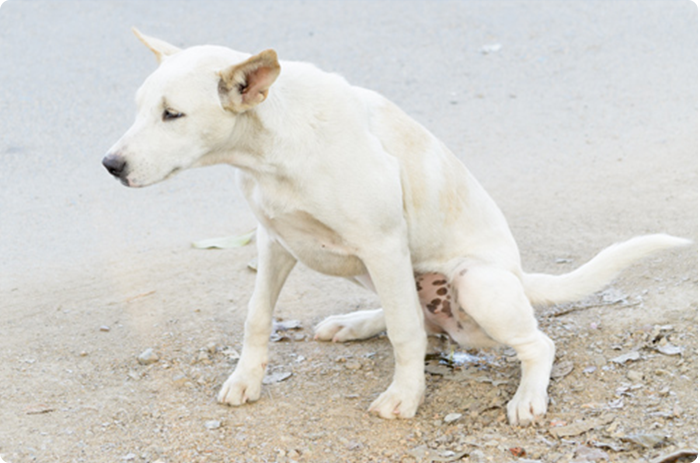
When the urinary tract is blocked, the obstruction should be removed and urination should be carried out as soon as possible.
(2) Treatment of oliguria
Anuria is a sign of dying. Diuresis is necessary as soon as possible after improving the dog's dehydration problem, otherwise it may aggravate the condition. Protein intake should be limited in diet.
(3) Treatment of polyuria
With the increase of urine output, a large number of electrolytes will be lost, so attention should be paid to the supplement of electrolytes to avoid the occurrence of hypokalemia. Pay attention to regular checks, when the blood urea nitrogen drops to 20 mg/ml, it can be used as an indicator of the beginning of the recovery period, and gradually increase the dog's protein intake.
(4) Convalescent treatment
Attention should be paid to supplementing dogs with high-protein, high-carbohydrate and vitamin-rich foods to ensure a reasonable supply of nutrients.

The answer to the riddle of treatment is to correct electrolyte imbalance, help kidney repair and regeneration, and promote dog urination. Traditional Chinese medicine also helps kidney recovery, such as Jisheng Shenqi Pill, Baoshen Decoction, Shenkang Injection, etc.
Chronic renal failure
Chronic renal failure (CRF) is a clinical syndrome characterized by gradual deterioration of renal function due to other diseases, which lasts for a long time, usually more than 2 weeks.
Chronic renal failure in dogs usually does not recover well, and there is no effective conservative treatment at present. Specific treatment methods can refer to the treatment of acute renal failure, mainly based on the principle of active treatment of primary disease and control of disease development.
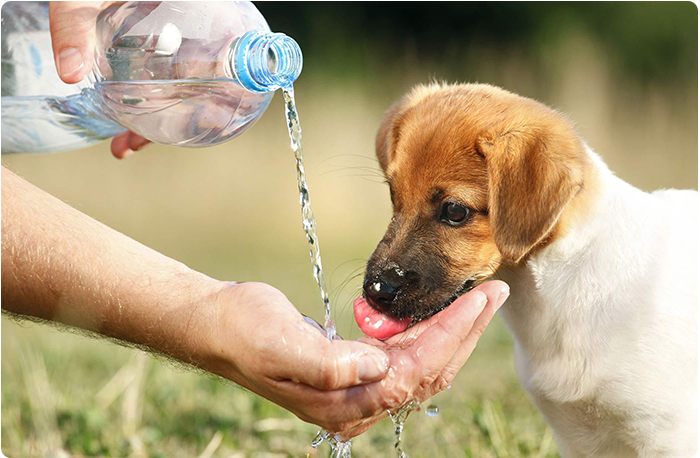
In addition, dogs with chronic renal failure should ensure adequate drinking water, low phosphorus, low protein, high energy, high potassium and low sodium, and adequate vitamins and fatty acids, which can delay the process of renal failure.
Difference between acute and chronic renal failure
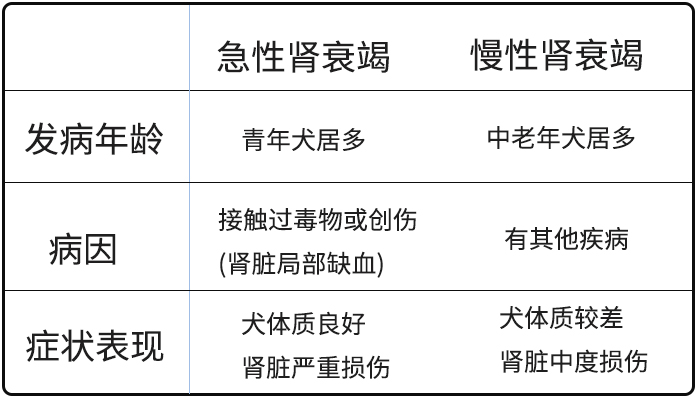
Acute and chronic renal failure in dogs have many similar symptoms, the boundaries are not clear, but the treatment is different, through the following table can make a simple distinction.
Stay away from kidney failure
Because of the special function of the kidney, the causes of renal failure are varied, so preventive measures are necessary.
Shovel excrement officer usually do a good job of regular deworming and epidemic prevention of dogs, feed balanced nutrition, pay attention to daily drinking water and defecation habits
, avoid holding urine for a long time. Elderly dogs should have a physical examination every six months or a year, carefully handle substances toxic to the kidney, and stay away from renal failure.