
"Don't dogs pee by themselves? Why do they need to be taught?" That's true, but dogs have a strong sense of territory, and the main way they mark their territory is to pee.
According to the information, the best time to train a poodle is when she is 3 to 6 months old, because this is the "golden period" for the best training of dogs. The grizzly bear is in this golden period. In fact, through some training before, the grizzly bear has already had some awareness of fixed-point urination and defecation. Now simply share the grizzly bear's fixed-point urination and defecation training process.
Indoor fixed-point defecation training
1. Prepare tools: dog toilet and urine pad
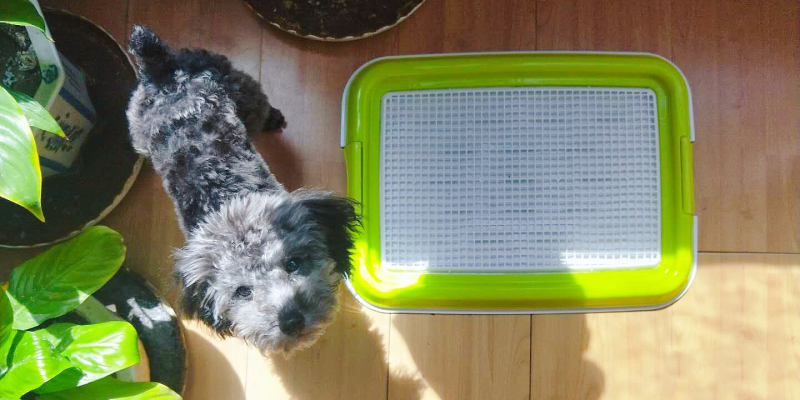
The use of a dog toilet and urine pad can facilitate the cultivation of grizzly bears to develop a fixed, familiar and visible area to defecate at a fixed point.
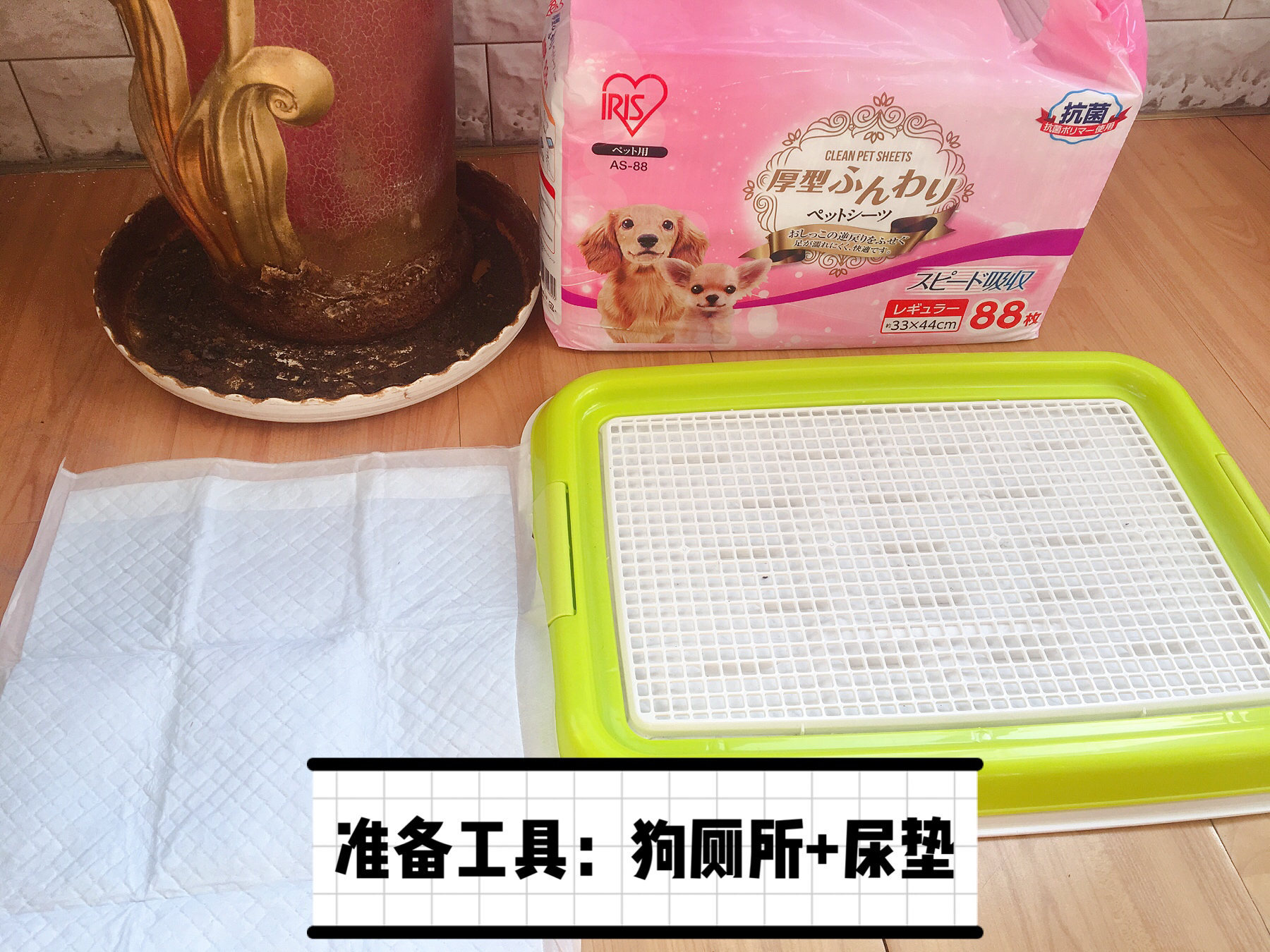
When you buy it back, let the grizzly bear get familiar with it. Let the grizzly bear see and sniff the dog toilet and urine pad first. This will help her adapt and prevent her from being frightened when she poops later. Because I have always maintained a free-range attitude towards grizzly bears and have not bought dog fences and cages, there is no way to train fixed-point urination and defecation through a narrow range of training methods, which is essential to familiarize grizzly bears and dogs with toilets and urine pads.
2. Choose a suitable location
Simply put, the right place is a safe place with the smell of her excretion.
In order to better attract the grizzly bear to the fixed dog toilet, I tried to smear some of the grizzly bear's urine on the brand-new urine pad in advance. The principle is to make the place emit some smell of the grizzly bear's own excretion, to attract the grizzly bear, and let her understand that this place is the place where she excretes.
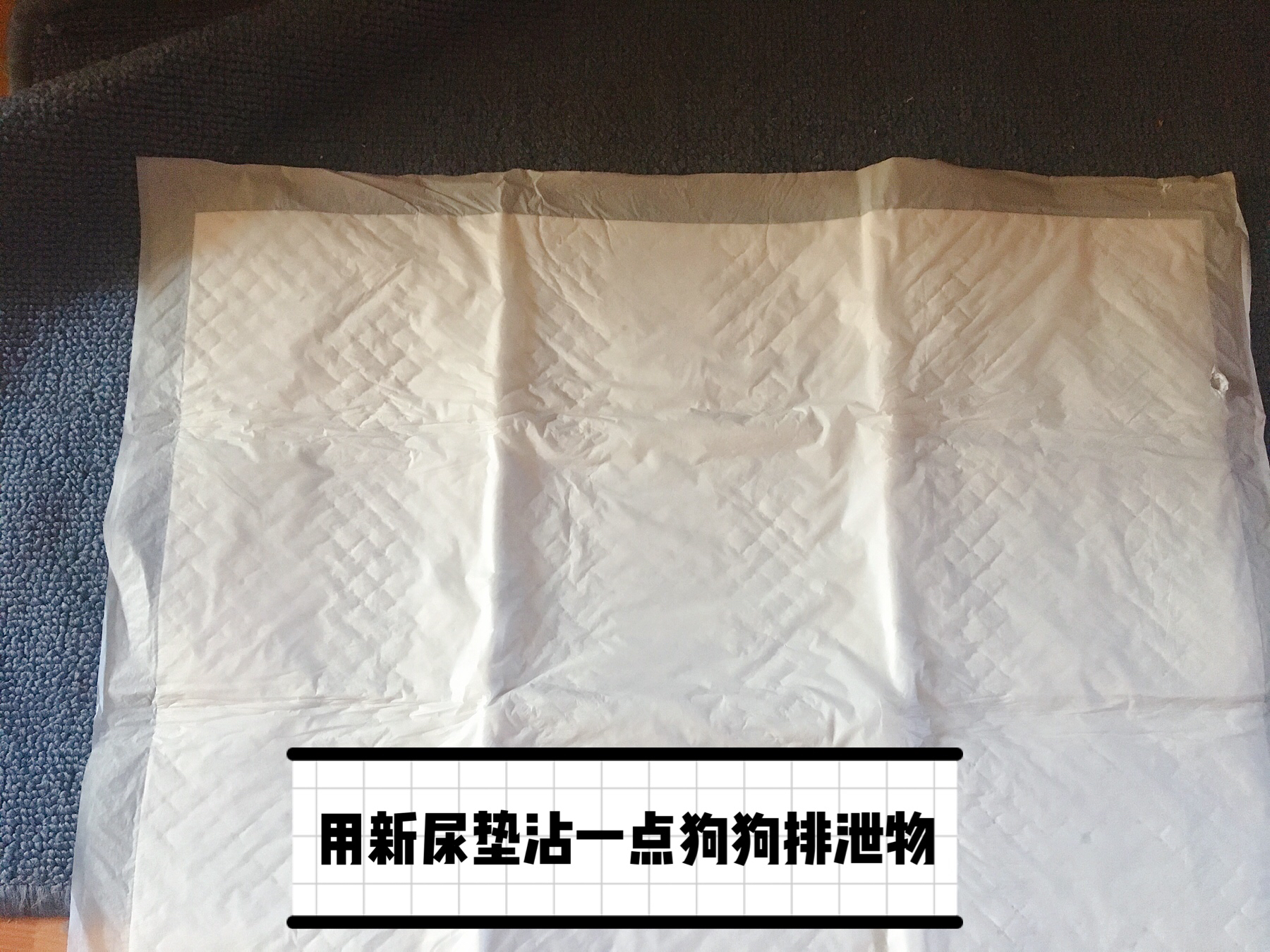
But pay attention to the quantity and don't take too much of her dropping. Dogs by nature will not actively cover their own urine, so if the dog does not want to use a diaper stained with their own urine, it means that the diaper is stained with too much urine, the dog thinks that "here is not clean, not suitable for further excretion".
Talk about why we didn't give the grizzly an inducer. Dogs (especially adult males) have a natural tendency to drown out the urine of other dogs, and this is taken advantage of by the use of inducers, which are formulated to resemble dog urine. But for puppies (especially the grizzly bear is a little princess), the inducer's ability to "mimic the urine of other dogs and use the nature of dogs to cover the urine" may not be realized. So it's not like spraying an inducer is the same as training a dog.
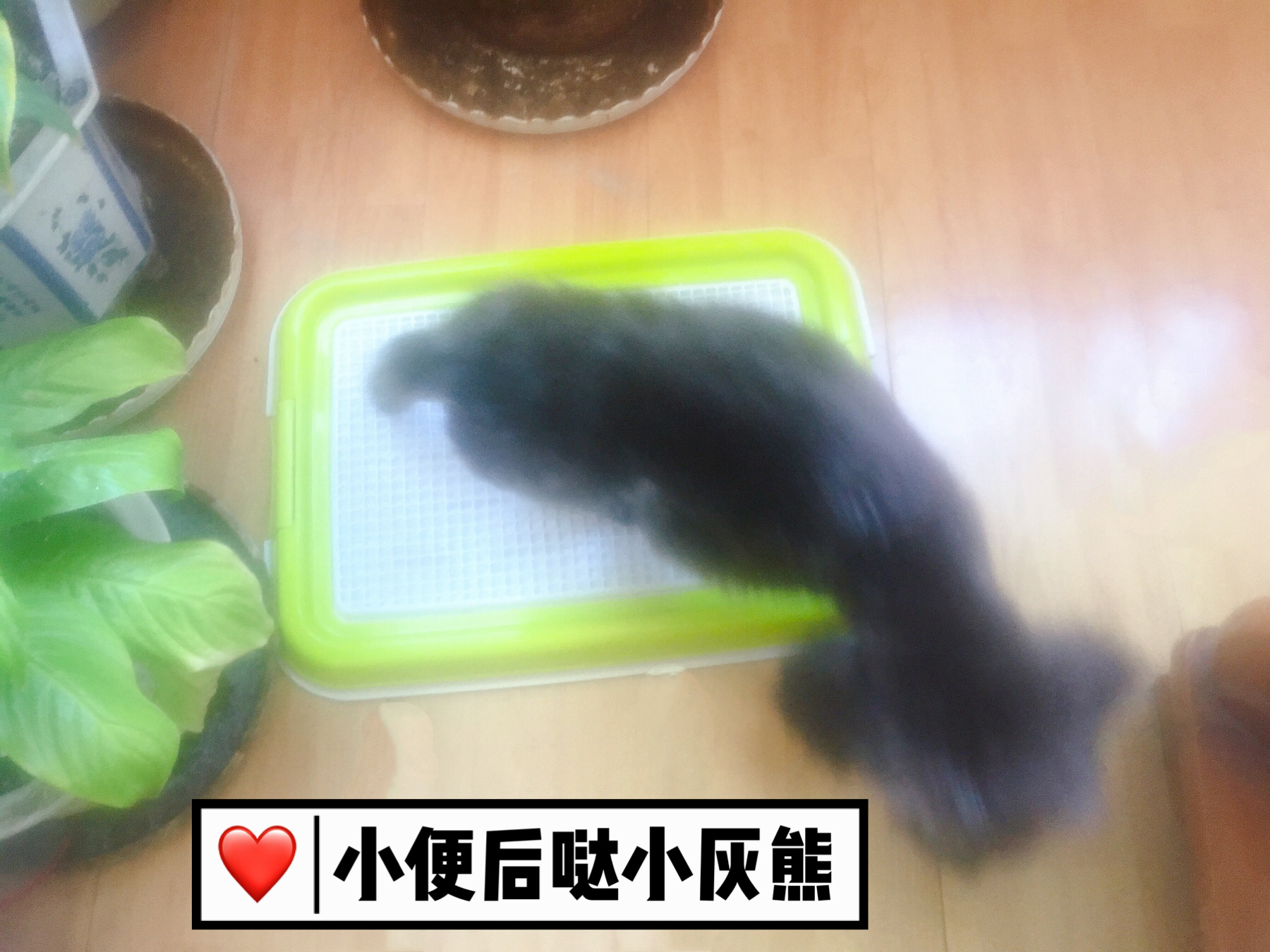
I also pay special attention to where grizzly bears go to the bathroom in the house. She likes to urinate and defecate in a place with some shelter. She doesn't go to the bathroom in front of us. She's shy. So choose a balcony with flowers and plants for the grizzly bear to urinate and defecate at a fixed point: that is, enclose an area so that the grizzly bear feels like a hidden space, take her to this place at the right time, not stare at her, but let her hide in it and praise her when she squats down to go to the toilet. Because grizzly bears are not very comfortable with me, watching her urinate and defecate, I only took pictures of her urinating and immediately evacuating (fat intestines blurred (; ´ `)).
3. Control the time of urination and defecation
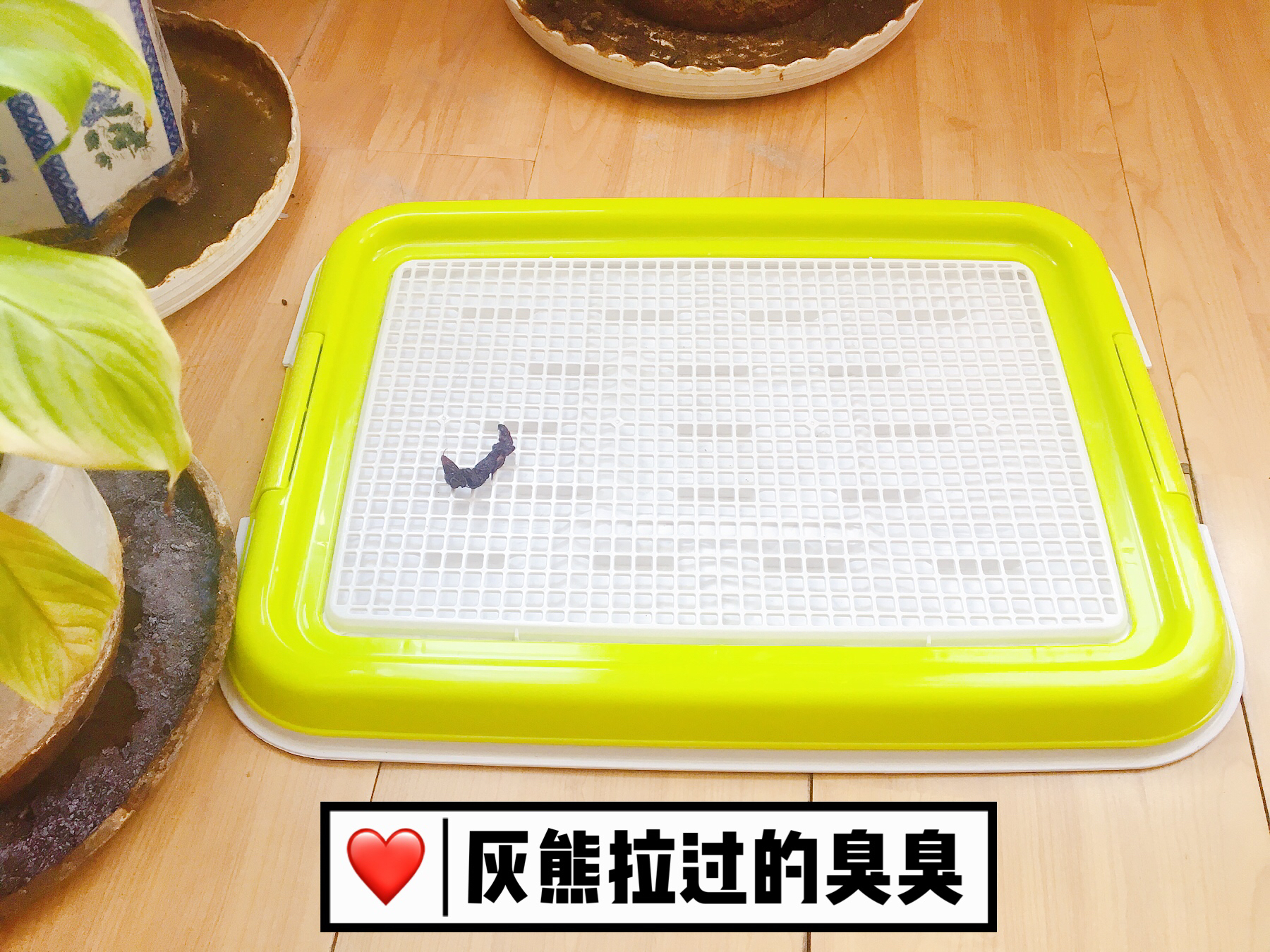
Grizzly bears often need to poop within 30 minutes (especially 15 minutes) after going to bed or eating, so 5-10 minutes after she eats, I will consciously take her to the balcony and guide her to the dog toilet and urine pad to defecate. Especially when the grizzly starts sniffing on the floor of the bed instead of playing or chewing on toys, which is basically a sign that she's about to relieve herself, I will guide her to the dog toilet on the balcony. But there is no need to repeat this process. After the grizzly learned it, he soon became familiar with ~ \ \ \ \ \ \ \ \ \ \ \ \ \ \ \ \ \ \ \ \ \ \ \ \ \ \ \ \ \ \ \ \ \ \ \ \ \ \ \ \ \ \ \ \ \ \ \ \ \ \ \ \ \ \ \ \ \ \ \ \ \ \ \ \ \ \ \ \ \ \ \ \ \ \ \ \ \ \ \ \ \ \ \ \ \ \ \ \ \ \ \ \ \ \ \ \ \ \ \ \ \ \ \ \
4. Reward is greater than punishment.
Grizzly bears need to be in a relaxed state before they are willing to defecate, and I believe other dogs are the same. Therefore, the shoveling officer should reinforce and encourage the correct behavior of the dog through rewards. When grizzly starts pooping on the dog's toilet or peeing pad, I will reward her by stroking her head, praising her happily and giving her a biscuit.
Outdoor defecation training
Take the grizzly bear to the grass, gently say to her: "grizzly bear, pull smelly, pee" and other commands, to speed up the speed of speech, cut and repeat until the grizzly bear successfully urinate and defecate, immediately give the reward snacks, and do not forget the verbal reward oh. This is a tug of war, if the dog does not urinate, remember not to let go of the lead, do not compromise, until she urinates and defecates outside, immediately give a reward. The conditioned reflex for dogs is: going out = peeing, pooping, smelly, smelly, snacks + verbal rewards = playing.
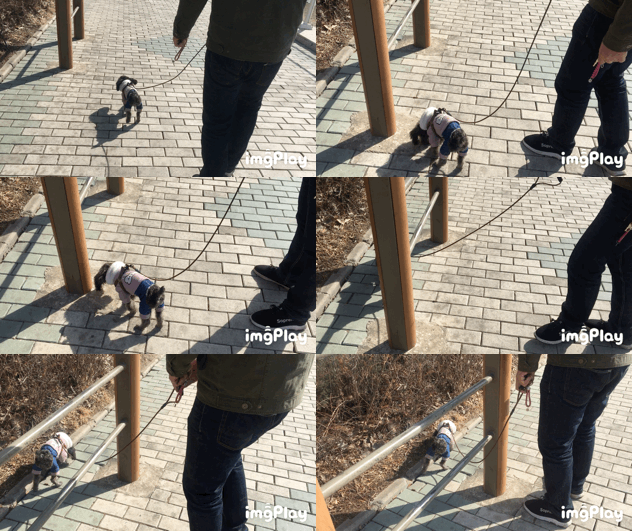
The grizzly bear basically goes downstairs once in the morning, noon and evening. In the morning, he takes her downstairs to urinate and shit before dinner. At lunch time, he takes her downstairs within half an hour after dinner. Every time, he urinates and defecates in the grass. And through training, whenever she is asked to urinate before going upstairs or getting on the bus, she can quickly find a place to urinate. Now occasionally in order to cheat a snack to eat dried meat, and repeatedly go to squeeze out some urine, waiting for my reward ( ().
Through training, Grizzly Bear now prefers to go downstairs to defecate and urinate. Only when we can't take her down (it's raining and snowing outside or it's too cold and windy, etc.), she will urinate and defecate at a fixed point indoors, which is very good and worry-free.
Personal effective experience, for reference only ~