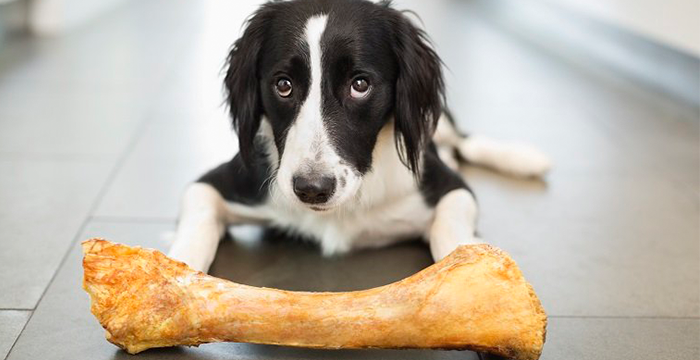
When the owner is eating food with bones, the dog on the side looks pitiful and wants to eat. In the face of this situation, the owner is always worried about whether to give the dog some bones, but he is afraid that it will hurt the dog's intestines and stomach. Can the dog eat bones? Let Dr. E answer it quickly!

Why do dogs like to eat bones?
When the ancestors of dogs used to hunt in the wild, they needed to eat all the bodies of their prey, including bones. Dogs have strong stomach acid and have stronger digestive tract capabilities than we humans. Owners who worry that dogs cannot digest bones are obviously worried.

What are the benefits of eating bones?
1 Helps Molars
When dogs are about 4 months old, they will begin to change their teeth. Eating bones at this time can help TA to grind their teeth, reduce the generation of double rows of teeth, and clean their oral cavity, which is very appropriate. Note: Dogs under 4 months of age have weak gastrointestinal digestion. Feeding bones is very easy to cause vomiting and diarrhea in dogs, so feeding is not recommended.

2 Calcium supplements
This is a common saying. Although dogs really give themselves very little calcium by gnawing bones, they also have a certain calcium supplement effect. In fact, the calcium in the bones is difficult to be absorbed by the dog's gastrointestinal digestion, and most of them are excreted with feces.
Eat bones to pay attention to four points
1 Don't feed raw bones
The raw bones are relatively soft, and the dog bites with bone foam, which is really not easy to hurt the dog. However, feeding raw bones is easy to infect parasites. Inexperienced novice shovelers still recommend cooking and feeding. Remember: cooked with water can be, do not put the table with salt taste of bone residue to baby!
2 should not take meat to eat
For example, small ribs, if the bones are wrapped in meat, the dog sometimes eats too fast and does not pay attention to the small bones in it. Direct swallowing may cause the bones to get stuck in the esophagus or stomach.

3 bones should not be too small pieces
The dog's teeth are actually very sharp and can chew the bones, so don't cut them too small for feeding. If they are cut too small, the dog will swallow the bones directly because it is very convenient to eat, which may cause the bones to get stuck in the esophagus or stomach. If the bone is too big for the dog's mouth to fit in, it can be cut small appropriately.
4 should not feed too much
Feeding bones should be appropriate, eating too much is easy to constipation, especially for some small dogs and old dogs, because the intestinal tract is fine, the peristaltic function is reduced, and it is not easy to digest. If it is a homemade recipe, bones can account for up to 10% of the daily food intake. If you feed dog food, bones are fed less and can only be used as snacks.
Choose the right bone feeding
Although dogs can eat bones, not all bones are suitable for feeding!
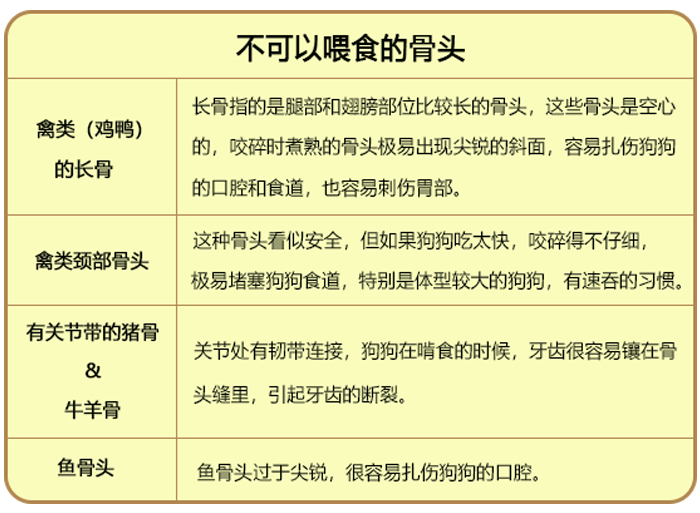
Big stick bones such as leg bones and shoulder blades of pigs, cattle and sheep are more suitable for dogs, and bones such as large ribs are thicker and safer for dogs to bite.
If shoveling excrement officials think it is troublesome to prepare bones, molar bone and molar stick snacks are also good choices!